

What Commercial Property Insurance Covers in Houston (and What It Doesn’t)
Commercial property insurance pays to repair or replace your building and the business property inside it after a covered loss, such as a fire, a hailstorm or a break-in. With the right add-on, it also pays the income you lose while you can’t operate (Texas Department of Insurance).
This page breaks down commercial property insurance coverage: what a standard policy pays for, the gaps Houston contractors, cleaning companies and food businesses find after a loss, and what to ask before you sign. For what to have ready and what it costs, read how to get commercial property insurance in Houston.
The 3 parts of a commercial property policy
1. Building
The structure, plus fixtures, permanently installed machinery and equipment, and outdoor fixtures. If you lease, your landlord usually insures the building, so read your lease to see what it puts on you.
2. Business personal property
What you own and use in the business at your location: furniture, computers, tools, equipment, supplies and inventory. It also includes tenant improvements and betterments, the build-out you paid for in a leased space, such as counters, shelving and lighting.
3. Business income and extra expense
Business income pays the net income you lose and the bills that keep coming, such as payroll, while a covered loss keeps you closed. Extra expense pays the added cost of reopening faster, such as a temporary location or rented equipment.
On a standalone commercial property policy, TDI lists both as extra-cost coverages, so check that you bought them. A business owner’s policy (BOP) includes business interruption coverage (Insurance Information Institute). On the standard ISO form many insurers use, business income starts 72 hours after the damage, while extra expense starts right away. An endorsement can shorten the wait.
Which causes of loss your policy covers
Your declarations page names 1 of 3 causes-of-loss forms. TDI describes them this way:
- Basic: fire, windstorm, hail, lightning, explosion, smoke, vandalism, sprinkler leakage, aircraft or vehicle collision, riot, sinkhole and volcano.
- Broad: the basic list plus leaking appliances, structural collapse, falling objects and the weight of ice, sleet or snow.
- Special: every cause of loss the policy doesn’t exclude.
Theft isn’t on the basic or broad list. If someone breaks into your unit and takes equipment or stock, you need the special form for the theft to be covered.
How a claim gets paid
Replacement cost or actual cash value
Replacement cost pays what it costs today to repair or replace the damaged property. Actual cash value subtracts depreciation, so a 6-year-old air conditioning unit is paid at what it was worth after 6 years of use, not at the price of a new one. TDI recommends a policy that includes replacement cost. Check the valuation for the building and for your contents separately.
Coinsurance
Most commercial property policies have a coinsurance clause, usually 80%, sometimes 90% or 100%. It requires you to insure the property for at least that share of its value. If you carry less, every partial claim is cut by the same ratio.
Example with an 80% clause:
- Your building would cost $500,000 to replace, so you need at least $400,000 of coverage.
- You carry $300,000, which is 75% of the required amount.
- A fire causes $100,000 of damage. The insurer pays 75% of it, $75,000, minus your $1,000 deductible: $74,000. You pay the other $26,000.
Raise your limits when construction costs go up, and ask whether your insurer offers agreed value, which suspends the coinsurance clause.
Deductibles
Expect 1 deductible for losses like fire or theft. Many Texas policies add a separate wind and hail deductible, often a percentage of the building limit. Our Houston buying guide shows what that percentage means in dollars. When you have a loss, see how a commercial property claim works in Texas.
8 gaps Houston business owners find after a loss
1. Tools and equipment away from your location
The policy covers property at the address on your declarations page. The standard ISO form many insurers use adds only $10,000 for property temporarily at another location, and that extension doesn’t apply to property in or on a vehicle.
For painting, sheetrock, insulation and cleaning crews, that means tools left in the truck aren’t covered, and tools at a job site are covered only up to $10,000. Tools that travel need an inland marine policy, which TDI lists for contractor equipment and property in transit. Business owner’s policies and some insurers’ own forms set different limits, so check yours.
2. Food trucks and other vehicles
A commercial property policy doesn’t cover vehicles. A taco truck is insured on a commercial auto policy, which TDI lists for food trucks, service trucks and trailers. Ask how the kitchen equipment on board is covered, because it may need its own coverage.
3. Power outages that start somewhere else
Standard policies exclude losses from a power failure that starts away from your premises, even when a storm caused it. After Hurricane Beryl made landfall on July 8, 2024, CenterPoint reported 2.26 million customers without power and gave July 19, 11 days after landfall, as the date to restore everyone (ABC13).
If you keep food or other stock that has to stay cold, 2 endorsements work together: utility services coverage for the off-site outage and spoilage coverage for the stock that goes bad. Utility services time element coverage can also pay the income you lose while the power is out.
4. Equipment that breaks down
A fire that destroys your air conditioner is covered. The same unit burning out on its own in August isn’t, because mechanical and electrical breakdown is excluded. Equipment breakdown coverage, which TDI calls boiler and machinery, pays for AC units, compressors, steam cookers, electric water heaters and similar equipment.
5. Frozen pipes when the heat is off
Water from a pipe that bursts is generally covered on the special form. Damage from freezing is covered only if you did your best to keep the building heated, or drained the pipes and shut off the water if you couldn’t. If you close the shop during a hard freeze like February 2021 with the heat off and water in the lines, the policy excludes the freeze damage.
6. Flood and sewer backup
Commercial property policies exclude flood. You buy flood coverage separately from the National Flood Insurance Program (NFIP) or a private insurer. TDI notes a 30-day waiting period before coverage starts, so buy it before a storm is in the forecast. NFIP policies for commercial buildings go up to $500,000 for the building and $500,000 for contents (NFIP).
Water that backs up through a sewer or floor drain is excluded too, even when there’s no flood. A sewer and drain backup endorsement adds it back.
7. Mold after a water loss
On the special form, mold coverage is limited to $15,000 a year, and only when the mold comes from a covered cause, such as a burst pipe. After any water loss, dry out the space and report the claim right away.
8. Code upgrades on older buildings
When a covered loss damages an older building, the city can require upgrades to current building code as part of the repair. The base policy excludes those extra costs. Ordinance or law coverage pays them (TDI).
TDI also lists earth movement, war, nuclear hazard, wear and tear, and insects or vermin as common exclusions.
Questions to ask before you sign
- Is my causes-of-loss form special, broad or basic?
- Are the building and my contents valued at replacement cost or actual cash value?
- What’s my coinsurance percentage, and do my limits meet it at today’s replacement cost? Is agreed value available?
- Does my policy include business income, and what are the limit and the waiting period?
- Are my tools covered at job sites and in my vehicles? If not, what does inland marine cost?
- Do I have utility services, spoilage, equipment breakdown and sewer backup coverage?
- What’s my wind and hail deductible in dollars?
- Do I need a flood policy, and can I buy it at least 30 days before I need it?
- Have I listed every location and worksite? TDI recommends telling your agent about all of them, and a newly acquired or constructed building has to be added within 30 days.
Why we explain coverage first
Janeth López owns Paga Menos Insurance and has worked in personal and commercial insurance for 15 years, in English and Spanish. She graduated from the University of Houston-Downtown in 2014. She saw that many customers, especially Latino business owners starting out, needed someone to explain their coverage in Spanish before they bought it.
“I wanted them to know that having the right coverages can lead to many opportunities in business, and being insured correctly means less liability for them.” – Janeth López, owner
Get a quote
Our team works with business owners in English and Spanish: Janeth López, owner and agent; Ingrid López, manager and agent; Lizabe Moreno, agent; and Alondra, customer service.
- Quote: by WhatsApp, by phone at (832) 804-9286 or (832) 669-6734, or online.
- Visit: 5901 Bellaire Blvd, Suite C, Houston, TX 77081. Monday to Friday, 9:00 am to 6:00 pm; Saturday, 10:00 am to 4:00 pm.
- Certificates: most business clients get their certificate of insurance the same day.
- Payments: monthly installments, autopay or ACH bank transfer.
We insure businesses in Houston and across Texas. Paga Menos Insurance, Texas license #1902026. You can confirm an agent’s license with TDI’s agent lookup.
Frequently asked questions
Does commercial property insurance cover rain that leaks through the roof?
Only if a covered cause, such as wind or hail, first damages the roof or walls and the rain gets in through that opening. Rain that gets in through a worn or aging roof is a maintenance problem the policy doesn’t pay for.
Does it cover damage my crew causes at a client’s property?
No. Commercial property covers your own building and property. Damage you cause to someone else’s property is a general liability claim.
Is commercial property insurance the same as a BOP?
No. A BOP combines property insurance, business interruption insurance and liability protection in 1 policy. It doesn’t include commercial auto or workers’ compensation, which need separate policies (Insurance Information Institute).
Sources: TDI commercial property insurance guide, NFIP guide for non-residential buildings, Insurance Information Institute on BOPs, PBS NewsHour on Hurricane Beryl outages, ABC13 on Beryl power restoration and TDI agent lookup.
Related articles
- Understanding Commercial Property Insurance in Texas
- How to Get Commercial Property Insurance
- Commercial Property Insurance Guide
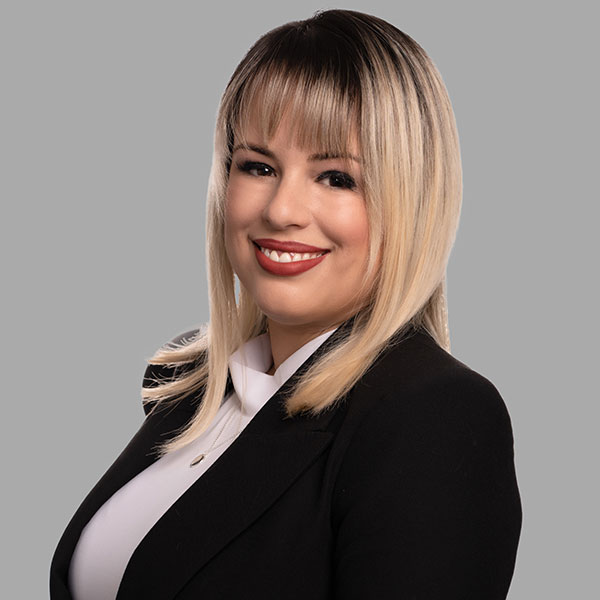
Janeth López can insure a Texas driver even without a U.S. driver’s license, the kind of policy many families assume isn’t available to them. As an agent at Houston-based Paga Menos Insurance, she covers the whole state across personal and commercial lines, from home, auto, and life coverage to business policies for taquerías, drywall crews, and truckers. She handles all of it in Spanish and builds payment plans around what a client can actually afford.